Book · Mahatma Gandhi · 1927
My Experiments with Truth (Satya ke Prayog): Hindi Audiobook
Quick Answer
The Story of My Experiments with Truth (Satya ke Prayog) is Mahatma Gandhi’s candid autobiography tracing his childhood, youthful mistakes, and lifelong testing of truth and nonviolence. Listen to the complete 27-part Hindi audiobook (28 episodes with trailer) narrated by Roshni on YouTube and Spotify.
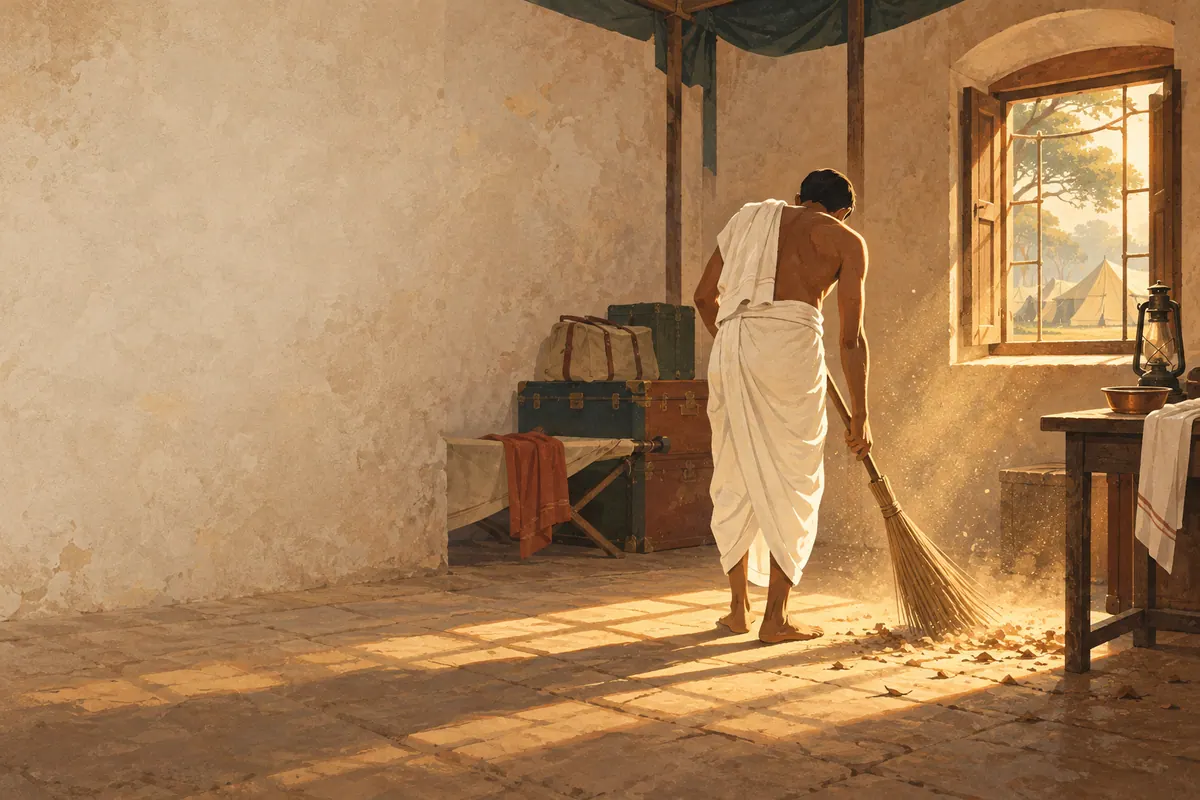
Hello friends, I’m your friend Roshni, back with a book that reads less like distant history and more like an honest mirror of the human mind. We often place great figures on pedestals so high they feel unreachable — yet every extraordinary journey starts with ordinary human flaws.
Satya ke Prayog — Mahatma Gandhi’s My Experiments with Truth — is not the polished portrait of a saint. It is the story of a shy boy afraid of the dark, a teenager who ate meat in secret, stole at home, and froze in panic during his first courtroom appearance, yet chose to confront every weakness with radical honesty.
Put on your headphones and walk alongside Mohandas Karamchand Gandhi, narrated complete in Hindi on Baatcheet.
Listen in Roshni’s voice (Hindi audio)

Narrated complete in Hindi across 27 parts (28 episodes including trailer) by Roshni on YouTube and Spotify.
The Story of My Experiments with Truth — Spoiler-free summary
The Story of My Experiments with Truth stands out for its disarming candor. Rather than hiding his failings, Gandhi lays them bare. The memoir opens in Porbandar and Rajkot, where a deeply shy boy grows up shaped by his devout mother Putlibai and principled father Karamchand Gandhi.
Married at thirteen to Kasturba, young Mohandas stumbles through adolescence — smoking secretly, stealing a bit of gold to pay a debt, trying meat under a friend’s influence, and failing to be at his dying father’s side. Yet remorse turns into a turning point when he writes a full confession and hands it to his father.
Sailing to London to study law brings fresh trials, including ostracism from his community. After briefly trying to dress and live like an “English gentleman,” Gandhi discovers peace in simplicity and vegetarianism. Returning home as a barrister, stage fright ruins his first case in the Bombay High Court — until a legal assignment in South Africa confronts him with stark racial discrimination and awakens a quiet resolve that reshapes his life.
Full plot summary and ending (spoilers)
If you are experiencing this story for the first time, listen to the Hindi audio on YouTube first — the ending lands best there. Then come back here.
Yes, show the full plot and ending
Spanning his childhood through the early 1920s, Mahatma Gandhi’s My Experiments with Truth chronicles how an ordinary, timid youth forged a philosophy of truth and nonviolence. Growing up in Porbandar and Rajkot under the quiet faith of Putlibai and integrity of Kaba Gandhi, young Mohandas was deeply shaped by plays about Shravan Kumar and Raja Harishchandra.
After child marriage and painful adolescent missteps — secret meat-eating, petty theft, and being away during his father’s final moments — Gandhi’s written confession to his father became his first enduring lesson in moral courage. Bound by three vows to his mother (abstaining from meat, alcohol, and infidelity), he traveled to London for law, eventually trading tailored suits for plain living, the Vegetarian Society, and close reading of the Bhagavad Gita and the Bible.
Following a faltering start at the Bombay bar, an 1893 legal case for Dada Abdulla took him to South Africa. Repeated humiliations — being ordered from a courtroom and thrown off a first-class train — galvanized his conscience. He helped found the Natal Indian Congress in 1894, defended indentured laborers like Balasundaram, and tested his convictions even within his own family, nursing his ten-year-old son Manilal through typhoid with nature cure.
Leaving South Africa in 1901, he persuaded Kasturba to donate their valuable farewell gifts of gold and silver to a public trust, and personally cleaned latrines at the Calcutta Congress camp — before returning to South Africa for the birth of Satyagraha and later leading Champaran, the Ahmedabad mill strike, and Kheda in India.
Key characters
- Mohandas Karamchand Gandhi
- A shy, flawed young man whose relentless experiments with truth, self-restraint, and moral courage gradually shaped him into the Mahatma.
- Kasturba Gandhi
- Married to Mohandas at age thirteen, she became his steadfast partner through every demanding vow and public sacrifice.
- Putlibai
- Gandhi’s deeply devout mother, whose quiet faith and strict fasts laid the moral foundation of his childhood.
- Karamchand (Kaba) Gandhi
- Gandhi’s principled father, whose integrity anchored the household and whose final illness left Gandhi with a lifelong lesson in remorse.
- Narayan Hemchandra
- A fearless, eccentric friend whom Gandhi met in England, unbothered by Western conventions in his plain Indian attire.
Themes
Confronting one’s own mistakes honestly
In My Experiments with Truth, Mahatma Gandhi refuses to mythologize himself. By confessing childhood thefts, secret meat-eating, and personal failings without excuse, he shows that growth begins with owning the truth.
An open-minded search across faiths
Gandhi’s pursuit of truth in My Experiments with Truth transcends any single creed. Studying the Gita, Bible, Quran, and Tolstoy in London and South Africa planted the ethical seeds of ahimsa and compassion.
Moral courage against racial injustice
Gandhi’s South Africa chapters trace how a tongue-tied lawyer found the nerve to resist systemic humiliation, founding the Natal Indian Congress and standing up for indentured workers.
Simplicity and self-reliance
From frugal student meals in London to cleaning Congress camp latrines in 1901 and placing farewell jewels into a public trust, Gandhi’s memoir ties public service directly to humility and physical labor.
Mahatma Gandhi
Mahatma Gandhi (1869–1948) remains a global emblem of truth and nonviolent resistance. Originally serialized in Gujarati in his weekly Navajivan and published in two volumes (1927 and 1929), The Story of My Experiments with Truth was written without pretense of perfection: Gandhi framed his life like a scientist’s notebook so future generations might learn from both his errors and his resolve.
Why listen to this Hindi audiobook?
Hearing My Experiments with Truth (Satya ke Prayog) narrated in Hindi by Roshni feels like sitting down with a thoughtful friend. Complete across 27 parts (28 episodes including trailer) on YouTube and Spotify, her steady, hype-free delivery lets every triumph and stumble resonate deeply — best enjoyed with headphones.
All parts — in Hindi on YouTube
- The Story of My Experiments with Truth · Part 133 min
- The Story of My Experiments with Truth · Part 227 min
- The Story of My Experiments with Truth · Part 329 min
- The Story of My Experiments with Truth · Part 430 min
- The Story of My Experiments with Truth · Part 524 min
- The Story of My Experiments with Truth · Part 623 min
- The Story of My Experiments with Truth · Part 727 min
- The Story of My Experiments with Truth · Part 827 min
- The Story of My Experiments with Truth · Part 926 min
- The Story of My Experiments with Truth · Part 1047 min
- The Story of My Experiments with Truth · Part 1151 min
- The Story of My Experiments with Truth · Part 1223 min
- The Story of My Experiments with Truth · Part 1334 min
- The Story of My Experiments with Truth · Part 1421 min
- The Story of My Experiments with Truth · Part 1534 min
- The Story of My Experiments with Truth · Part 1634 min
- The Story of My Experiments with Truth · Part 1742 min
- The Story of My Experiments with Truth · Part 1840 min
- The Story of My Experiments with Truth · Part 1948 min
- The Story of My Experiments with Truth · Part 2038 min
- The Story of My Experiments with Truth · Part 2137 min
- The Story of My Experiments with Truth · Part 2225 min
- The Story of My Experiments with Truth · Part 2342 min
- The Story of My Experiments with Truth · Part 2433 min
- The Story of My Experiments with Truth · Part 2540 min
- The Story of My Experiments with Truth · Part 2659 min
- The Story of My Experiments with Truth · Part 2754 min
Frequently asked questions
Who wrote My Experiments with Truth, and what was its original title?
It was written by Mahatma Gandhi in Gujarati under the original title Satya na Prayogo (Satya ke Prayog in Hindi).
What does Gandhi’s autobiography cover?
My Experiments with Truth traces Mahatma Gandhi’s life from childhood in Porbandar and Rajkot through law school in London, civil-rights struggles in South Africa, and India’s early movements up to the early 1920s.
Where can I listen to Satya ke Prayog in Hindi audio?
You can listen to the complete 27-part Hindi audiobook (28 episodes including trailer) narrated by Roshni for free on Baatcheet’s YouTube channel and Spotify podcast.
What personal mistakes does Gandhi confess in the book?
Gandhi writes candidly about eating meat in secret, smoking and stealing from home as a teenager, and failing to remain at his dying father’s bedside.
Where can Global Indians listen to Hindi audiobooks like this?
Global Indians living abroad can stream Roshni’s accessible Hindi narration of My Experiments with Truth free on YouTube and Spotify to stay connected to Indian history and language.
When was My Experiments with Truth first published?
After running weekly in Navajivan, the first volume was published in 1927 and the second in 1929.
How did child marriage at age 13 affect Gandhi?
Gandhi notes candidly that marrying at thirteen interrupted his schooling and that he was initially jealous and controlling toward Kasturba — flaws he later worked hard to overcome.
Listen next

Autobiography of a Yogi
Paramahansa Yogananda
Paramahansa Yogananda’s 1946 spiritual classic Autobiography of a Yogi (Ek Yogi ki Atmakatha) chronicles his search for God, his training under Swami Sri Yukteswar, and the revival of Kriya Yoga. Listen to the complete 26-part Hindi audiobook narrated by Roshni on YouTube and Spotify.