Novel · Dharamvir Bharati · 1949
Gunahon ka Devta: Chander and Sudha’s Unfinished Story
Quick Answer
Gunahon ka Devta is Dharamvir Bharati’s beloved 1949 Hindi novel tracing the tragic, unspoken love of Chander and Sudha against rigid social propriety in 1940s Allahabad. Listen to the complete 20-part Hindi audiobook and Roshni’s candid review on YouTube and Spotify.
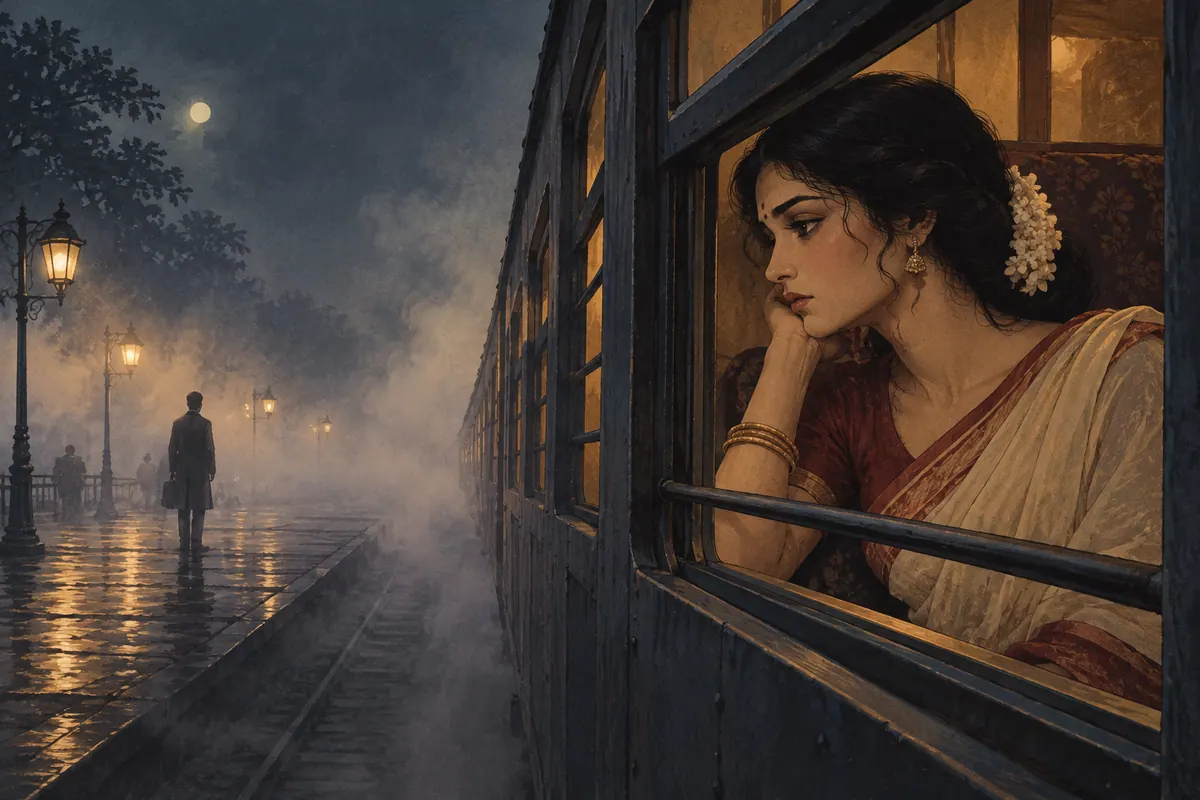
Hello friends, I’m your friend Roshni. Today I bring you a story steeped in the lanes of old Allahabad and the cool breeze of Macpherson Lake — a novel that has moved generations of Hindi readers to tears.
When Dharamvir Bharati published Gunahon ka Devta in 1949, perhaps even he did not foresee how deeply it would endure in Hindi literature. It is a love story where devotion bordered on worship, yet social propriety became a wall that shattered everything in its path.
Was Chander truly a deity — or a sinner? Is physical longing really a sin? Let’s turn the pages of Chander and Sudha’s unforgettable tragedy, narrated complete in Hindi on Baatcheet.
Listen in Roshni’s voice (Hindi audio)

Narrated complete in Hindi across 20 parts by Roshni on YouTube and Spotify, accompanied by a separate candid Hindi book review.
Gunahon ka Devta — Spoiler-free summary
Set in 1940s Allahabad (Prayagraj), Dharamvir Bharati’s Gunahon ka Devta revolves around Chander and Sudha. Chander is an idealistic, brilliant student cherished like a son by Sudha’s father, Dr. Shukla. Sudha is spirited and innocent, viewing Chander as her friend, beloved, and idol all at once.
The two share an intense, unspoken bond. Chander insists on elevating his love for Sudha into something purely spiritual, untouched by desire or worldly compromise. Yet society has its own rigid boundaries. When Dr. Shukla arranges Sudha’s marriage to Kailash, Sudha is devastated and looks to Chander to step forward and claim her.
Instead, trapped by his own ideals and his obsession with remaining a selfless “deity,” Chander persuades Sudha that true love is too sacred to be stained by ordinary domesticity. Trusting him completely, Sudha marries another man and leaves her home in tears.
After Sudha’s departure, Chander’s inner world unravels. Seeking refuge from grief and emptiness, he is drawn to Pammi DeCruise, an independent woman who confronts him with his hypocrisy and hollow idealism. Meanwhile Binti, a quiet young woman living in Dr. Shukla’s household, bears the brunt of Chander’s growing bitterness.
Can Chander arrest his own collapse, and what becomes of a love sacrificed at the altar of false morality? You have to walk all the way to the final pages to feel the full weight of Bharati’s tragedy.
Full plot summary and ending (spoilers)
If you are experiencing this story for the first time, listen to the Hindi audio on YouTube first — the ending lands best there. Then come back here.
Yes, show the full plot and ending
In its second half, Gunahon ka Devta deepens into an unrelenting psychological tragedy. After Sudha leaves for her married home, Chander tries to hide behind intellect and propriety while suffocating inside.
By Macpherson Lake he meets Pammi DeCruise, whose blunt honesty tears away the mask of his ascetic idealism. She forces him to see that rejecting physical love in the name of purity is slowly killing his humanity. After Pammi leaves, Chander turns his guilt and rage inward — and unfairly lashes out at innocent Binti, whose quiet loneliness deepens the novel’s somber arc.
Meanwhile, in her in-laws’ house on Delhi’s Rohtak Road, Sudha wastes away in silence. Having married solely to honor Chander’s wish, her spirit never leaves Allahabad. When Chander visits during the summer holidays, an unspoken wall of silence stands between them. Growing frailer by the day, Sudha immerses herself in fasting and prayer as a form of penance, questioning the divide between body and soul that left Chander all body and herself all spirit.
In the devastating climax, Sudha falls gravely ill. Summoned by Binti, Chander arrives to find her hovering between life and death. With her last breath, Sudha tells Chander she has placed the dust of his feet upon her forehead, entrusts her father and Binti to his care, and slips away forever.
In the epilogue, Chander carries Sudha’s ashes to the quiet ghats of Triveni Sangam. Under moonlight by the river, overwhelmed by grief and madness, he places Sudha’s ashes in the parting of Binti’s hair and kisses her — a haunting conclusion in which Chander recognizes the cost of his choices far too late.
Key characters
- Chander
- An idealistic, gifted student whose obsession with appearing a selfless “deity” and fear of social disapproval lead him to destroy his own love.
- Sudha
- Dr. Shukla’s lively, trusting daughter, who places complete faith in Chander and sacrifices her own happiness at a single word from him.
- Pammi DeCruise
- A free-spirited woman who strips away Chander’s hollow idealism and confronts him with the reality of body and soul.
- Binti
- A gentle, sisterly presence in Dr. Shukla’s household who endures Chander’s misplaced anger yet stands by him in his darkest grief.
- Dr. Shukla
- Sudha’s respected, authoritative father in Allahabad, whose discipline and social standing leave Sudha unable to voice her own heart.
Themes
Platonic love versus physical desire
In Gunahon ka Devta, Dharamvir Bharati asks whether physical longing is truly a sin. Chander convinces himself that keeping his love for Sudha purely platonic preserves its sanctity, yet that rigid idealism creates a living hell for both of them. Through Pammi DeCruise by Macpherson Lake, Bharati exposes how denying one’s human nature in the name of purity becomes a form of cowardice.
Propriety and the fear of society
Dharamvir Bharati’s Gunahon ka Devta probes whether social respectability should ever outweigh a living woman’s happiness. A modest student before the influential Dr. Shukla, Chander lacks the courage to ask for Sudha’s hand, pushing her into marriage with Kailash so his own reputation as a noble “deity” remains intact — a decision that costs them everything.
The destructive burden of sacrifice
Gunahon ka Devta challenges the romantic myth that sacrifice is always noble. Sudha withers away in her Delhi household, while Chander fractures under his own self-denial and wounds innocent Binti. Bharati shows clearly that unexamined sacrifice — made by crushing one’s own truth — brings peace to no one.
Patriarchy and a woman’s silence
Dharamvir Bharati captures the suffocating patriarchy of 1940s society in Gunahon ka Devta, where even an educated young woman like Sudha has no space to claim her own life. Unable to speak openly to her father Dr. Shukla and overruled by Chander’s ideals, Sudha retreats into quiet endurance until it consumes her.
Dharamvir Bharati
Dharamvir Bharati (1926–1997) was one of the defining voices of modern Hindi literature. Published in 1949 when he was in his early twenties (around 23), Gunahon ka Devta brought him immediate literary renown for its raw emotional honesty and psychological depth. His other landmark works include the verse play Andha Yug and the novel Suraj ka Satvan Ghoda, alongside his long, influential editorship of the Hindi weekly Dharmyug.
Why listen to this Hindi audiobook?
If you have never read Dharamvir Bharati’s classic, experiencing Gunahon ka Devta in Roshni’s warm, empathetic Hindi narration is deeply rewarding. Across 20 complete audiobook episodes — followed by Roshni’s candid review — the lanes of old Allahabad, the stillness of Macpherson Lake, and Chander and Sudha’s heartbreak come vividly alive. Put on headphones and immerse yourself in one of Hindi literature’s most talked-about tragedies.
All parts — in Hindi on YouTube
- Gunahon ka Devta · Part 128 min
- Gunahon ka Devta · Part 229 min
- Gunahon ka Devta · Part 337 min
- Gunahon ka Devta · Part 426 min
- Gunahon ka Devta · Part 528 min
- Gunahon ka Devta · Part 641 min
- Gunahon ka Devta · Part 725 min
- Gunahon ka Devta · Part 830 min
- Gunahon ka Devta · Part 937 min
- Gunahon ka Devta · Part 1026 min
- Gunahon ka Devta · Part 1126 min
- Gunahon ka Devta · Part 1230 min
- Gunahon ka Devta · Part 1336 min
- Gunahon ka Devta · Part 1436 min
- Gunahon ka Devta · Part 1534 min
- Gunahon ka Devta · Part 1637 min
- Gunahon ka Devta · Part 1738 min
- Gunahon ka Devta · Part 1832 min
- Gunahon ka Devta · Part 1926 min
- Gunahon ka Devta · Part 2019 min
Frequently asked questions
What is Gunahon ka Devta about?
Dharamvir Bharati’s Gunahon ka Devta tells the tragic love story of Chander and Sudha in 1940s Allahabad, showing how rigid social propriety and false idealism lead Chander to push Sudha into marrying Kailash, devastating both their lives.
Who wrote Gunahon ka Devta, and when was it published?
The classic Hindi novel Gunahon ka Devta was written by Dharamvir Bharati and first published in 1949, when he was around 23 years old. Generations of readers count it among Hindi literature’s most enduring books.
How does Gunahon ka Devta end?
In the tragic ending of Dharamvir Bharati’s Gunahon ka Devta, Sudha succumbs to grief and illness. Chander carries her ashes to the Triveni Sangam and, overcome by sorrow and madness, places them in the parting of Binti’s hair.
Where can Global Indians listen to Hindi audiobooks like Gunahon ka Devta?
Listeners in the US, Canada, the UK, and beyond can stream Dharamvir Bharati’s classic narrated in Hindi by Roshni for free on Baatcheet’s YouTube channel and Spotify — a warm way to stay connected to Hindi literature.
Was Chander truly a deity or a sinner?
That question lies at the heart of Dharamvir Bharati’s novel. While Chander claims to sacrifice love for propriety, his choice destroys Sudha. In Roshni’s view, he is no deity, but a flawed man trapped by cowardice and hollow idealism.
Where can I listen to the complete Gunahon ka Devta Hindi audiobook?
You can listen to the complete 20-part Hindi audiobook of Gunahon ka Devta — along with Roshni’s separate candid review — for free on Baatcheet’s YouTube channel and Spotify podcast.
Listen next
Pinjar
Amrita Pritam
Pinjar is Amrita Pritam’s landmark 1950 Partition novel, following Puro and Rashid through abduction, exile, and the upheaval of 1947. Read the guide in English here, and listen to the complete 5-part audiobook narrated in Hindi by Roshni on YouTube and Spotify.