Short Story · Anton Chekhov · 1887
The Lottery Ticket by Anton Chekhov: Summary & Hindi Audio
Quick Answer
Anton Chekhov’s razor-sharp 1887 Russian short story The Lottery Ticket follows Ivan Dmitritch and his wife Masha as the mere possibility of winning 75,000 roubles turns their contented marriage into suspicion and resentment. Listen to the complete ~15-minute Hindi narration by Roshni on YouTube and Spotify.
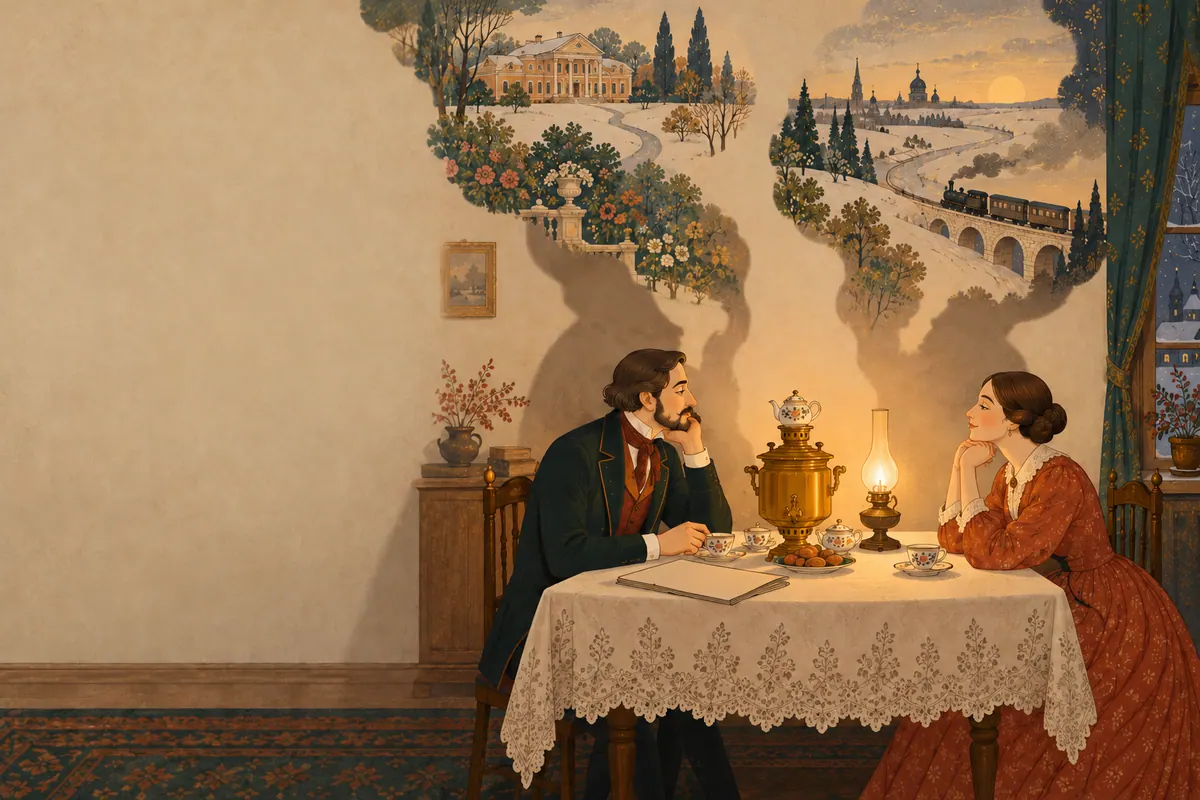
Hello friends, I’m your friend Roshni, back with another timeless short story. Imagine holding a lottery ticket that looks poised to transform your ordinary life overnight. Would sudden wealth truly bring happiness — or quietly poison the closest relationship you have?
Today we travel to nineteenth-century Russia for Anton Chekhov’s The Lottery Ticket, a brief, piercing mirror of human greed and married life. Put on your headphones and join Ivan Dmitritch and Masha — narrated complete in Hindi on Baatcheet.
Listen in Roshni’s voice (Hindi audio)
Narrated complete in Hindi in a single ~15-minute video by Roshni on YouTube and Spotify.
The Lottery Ticket — Spoiler-free summary
Anton Chekhov’s The Lottery Ticket opens on an ordinary evening in a contented middle-class Russian household. Ivan Dmitritch is comfortably satisfied with his modest income, and his wife Masha is busy clearing the supper table. While Ivan relaxes on the sofa reading the newspaper, Masha asks him to check the lottery draw for a ticket she bought.
Glancing down the list, Ivan freezes: Masha’s series number — 9499 — is right there among the winners! Without looking at the individual ticket number yet, both husband and wife are swept away by the dazzling prospect of winning 75,000 roubles.
Rather than checking the final digits right away, they let their imaginations soar — a country estate, rich meals, foreign travel. Yet before long, warmth gives way to dark suspicion. Realizing the ticket belongs to Masha, Ivan imagines her hoarding the fortune and favoring her own relatives; Masha reads his expression and fears he intends to seize her money.
Do Ivan and Masha actually hold the winning number — and what happens to their quiet home when they finally look? Listen to Roshni’s ~15-minute Hindi narration for Chekhov’s unforgettable punchline.
Full plot summary and ending (spoilers)
If you are experiencing this story for the first time, listen to the Hindi audio on YouTube first — the ending lands best there. Then come back here.
Yes, show the full plot and ending
Published in 1887, Anton Chekhov’s The Lottery Ticket dissects how swiftly greed corrupts even a contented marriage. Relaxing on his sofa with the evening paper, middle-class clerk Ivan Dmitritch checks the lottery results at his wife Masha’s request and discovers her series number, 9499, listed for the 75,000-rouble prize.
Holding off on checking the ticket number itself, the couple indulges in vivid daydreams of buying a country estate, dining well, and traveling abroad. Soon, however, Ivan remembers the ticket is legally Masha’s. Resentment flares in his mind: he convinces himself she would lock the money away, begrudge him every kopeck, and shower her own grasping relatives while his kin would come begging too. Suddenly Masha looks irritating and plain to him.
Across the table, Masha reads the hostility in Ivan’s eyes and suspects he is already scheming to take her winnings. Within minutes, two affectionate spouses glare at each other like bitter enemies.
At last, unable to bear the tension, Ivan looks back at the paper for the exact winning number. Their ticket is No. 26; the winning number is No. 46. They have won nothing. Instantly the fantasies vanish along with their mutual hatred — yet their once-comfortable room now looks shabby, cramped, and unbearable, proving that even imagined wealth can poison everyday peace.
Key characters
- Ivan Dmitritch
- An ordinary, contented middle-class husband whose sudden hope of winning the lottery awakens hidden selfishness, envy, and resentment.
- Masha
- Ivan’s practical wife who holds the lottery ticket and grows equally suspicious of her husband’s motives as soon as fortune seems within reach.
- Masha’s Relatives
- Masha’s brothers and nephews, whom Ivan imagines flocking to flatter her and beg for money if she wins.
- Ivan’s Relatives
- Ivan’s own siblings, whom he resentfully anticipates having to share any windfall with.
Themes
How the mere hope of money awakens greed
Anton Chekhov’s The Lottery Ticket shows that money need not even arrive to corrupt the mind. The sheer fantasy of 75,000 roubles is enough to turn a peaceful couple petty and hostile within a single evening.
Can a marriage withstand the test of imagined wealth?
In The Lottery Ticket, Chekhov reveals how fragile domestic harmony can be beneath the surface. The moment ownership of the prize enters their thoughts, affection yields instantly to suspicion and distrust.
The clash between daydreams and everyday reality
By indulging in castles in the air before checking the final digits, Ivan and Masha spoil the quiet contentment they already had. When ticket 26 loses to 46, their familiar home suddenly feels dreary and oppressive.
How selfishness shrinks human sympathy
Chekhov exposes the petty side of Ivan Dmitritch’s self-regard: picturing Masha locking the cash away for her own relatives, he strips away years of companionship in minutes — a stark study of hidden ego.
Anton Chekhov
Anton Chekhov (1860–1904) was a Russian physician, playwright, and one of the foremost masters of the modern short story. Known for understated clarity and acute psychological insight, Chekhov rarely lectures his readers — instead letting his characters’ quiet flaws speak for themselves, as brilliantly demonstrated in The Lottery Ticket (1887).
Why listen to this Hindi audiobook?
If you have fifteen quiet minutes over evening tea, Roshni’s single-video Hindi narration of Anton Chekhov’s The Lottery Ticket is pitch-perfect listening. Her unhurried delivery lets every shift from cozy warmth to bitter suspicion and comic deflation land cleanly on YouTube and Spotify.
Frequently asked questions
Who wrote The Lottery Ticket, and when was it published?
The Lottery Ticket was written by Russian author Anton Chekhov and first published in 1887. It explores greed and marital suspicion through Ivan Dmitritch and his wife Masha.
Where can I listen to The Lottery Ticket in Hindi audio?
You can listen to Anton Chekhov’s The Lottery Ticket narrated complete in Hindi by Roshni in a single ~15-minute video on Baatcheet’s YouTube channel and Spotify podcast.
What were Ivan and Masha’s lottery series and ticket numbers?
In Chekhov’s story, Masha’s ticket matched the winning series 9499, raising hopes of 75,000 roubles, but their ticket was No. 26 while the winning number turned out to be No. 46.
How does The Lottery Ticket end — do they win?
No. When Ivan finally checks the full number, he discovers No. 46 won instead of their No. 26. Their fantasies collapse instantly, leaving them oddly irritable and dissatisfied with their ordinary home.
What is the main message of Chekhov’s The Lottery Ticket?
Chekhov shows how easily the mere promise of sudden wealth breeds selfishness, mistrust, and dissatisfaction — even before a single coin changes hands.
Where can Global Indians listen to classic stories like Chekhov in Hindi audio?
Listeners in the US, UK, Canada, the Gulf, and beyond can stream Anton Chekhov’s The Lottery Ticket and other world classics narrated in Hindi by Roshni for free on Baatcheet’s YouTube channel and Spotify.
How does the lottery ticket change Ivan Dmitritch?
Merely imagining the prize consumes Ivan with greed and suspicion: he begins resenting Masha over money they have not even won, and loses contentment with his own life.
Listen next

The Postmaster
Rabindranath Tagore
Rabindranath Tagore’s The Postmaster (1891) tells the tender story of a lonely Calcutta clerk posted to a remote Bengal village and Ratan, the orphaned girl who cares for him. Listen to the complete Hindi audio narration by Roshni on YouTube and Spotify.