Short Story · D. H. Lawrence · 1926
The Rocking-Horse Winner by D. H. Lawrence: Summary & Hindi Audio
Quick Answer
D. H. Lawrence’s 1926 classic The Rocking-Horse Winner follows young Paul, who rides his wooden rocking horse into a frenzy to predict winning racehorses and silence his mother’s unspoken hunger for money. Listen to the complete story, meaning, and takeaways narrated in Hindi by Roshni on YouTube and Spotify (also helpful for CBSE Class 11 students).
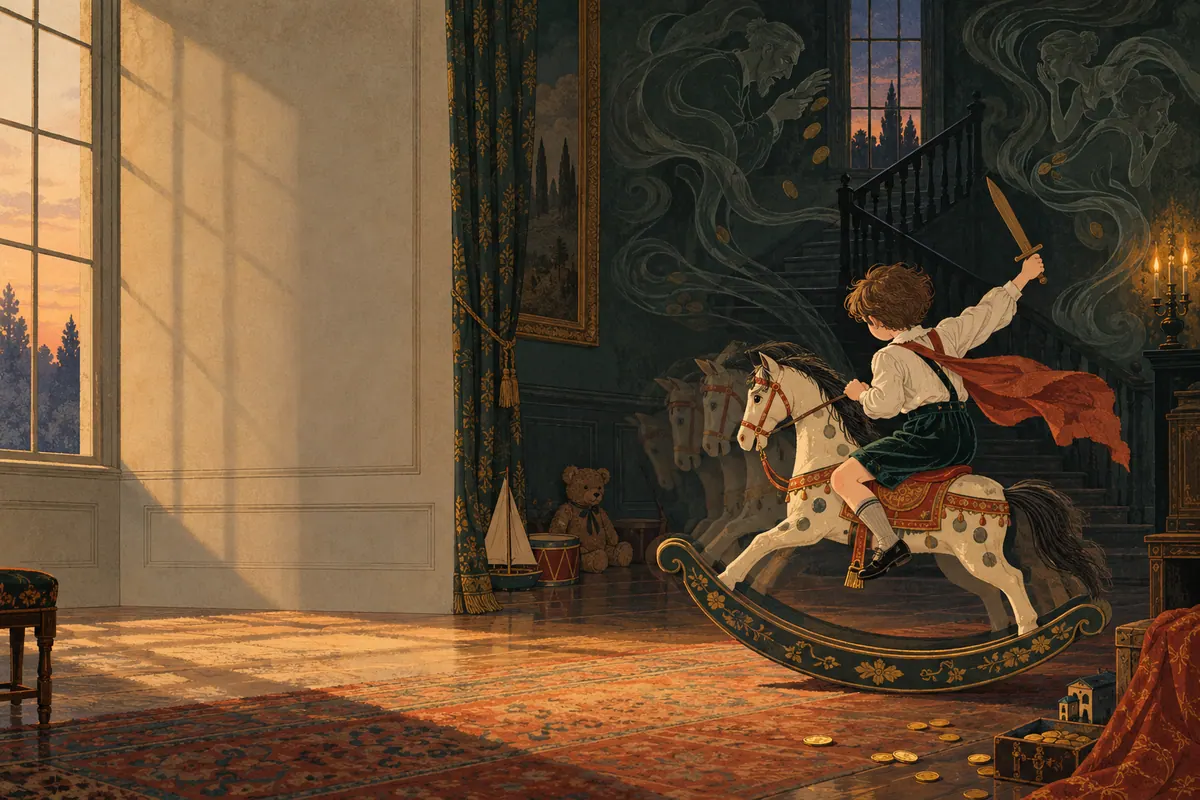
Hello friends, I’m your friend Roshni. Some stories settle so deeply into the mind that their echo lingers for days. Today we step into D. H. Lawrence’s haunting 1926 psychological tale, The Rocking-Horse Winner.
Far more than the story of a sensitive child, it holds an unforgiving mirror to greed and emotional emptiness. When a household’s restless hunger for wealth grows so suffocating that the very walls seem to whisper, “There must be more money!” — what price does childhood pay? Join me as we listen in Hindi on Baatcheet.
Listen in Roshni’s voice (Hindi audio)

Narrated complete in Hindi as a single episode (story, meaning, and takeaways) by Roshni on YouTube and Spotify.
The Rocking-Horse Winner — Spoiler-free summary
D. H. Lawrence’s The Rocking-Horse Winner opens inside an outwardly graceful English household gripped by quiet discontent. Hester looks charming and devoted, yet inwardly knows her heart feels cold toward her three children; her overriding bitterness is that her husband lacks “luck” — and therefore money.
Although no one speaks it aloud, the children sense an oppressive whisper haunting every room: “There must be more money!” Sensitive young Paul absorbs his mother’s unhappiness deeply and resolves to become “lucky” himself so he can silence the house’s anxiety.
Retreating to his nursery, Paul rides his wooden rocking horse with fierce intensity until, in a strange trance, the name of an upcoming racehorse winner flashes into his mind. Partnering with the loyal family gardener Bassett — who knows horse racing well — Paul starts placing bets and winning consistently, eventually drawing his wealthy Uncle Oscar into the secret.
Will Paul’s eerie gift bring peace to his home, or will adult greed swallow his childhood whole? Listen to Roshni’s Hindi episode to experience both the full story and its deeper meaning.
Full plot summary and ending (spoilers)
If you are experiencing this story for the first time, listen to the Hindi audio on YouTube first — the ending lands best there. Then come back here.
Yes, show the full plot and ending
In D. H. Lawrence’s The Rocking-Horse Winner, Hester’s relentless anxiety over money and social status fills her home with an unspoken dread that her children hear as a constant whisper: “There must be more money!” Determined to prove himself “lucky” and win his mother’s love, young Paul rides his wooden rocking horse furiously until he enters a trance revealing winning racehorses. Backed first by the gardener Bassett and later by his Uncle Oscar, Paul accumulates substantial winnings.
Hoping to silence the house’s whispers forever, Paul arranges through a lawyer for £5,000 to be gifted anonymously to his mother in yearly installments. Instead of bringing peace, the windfall deepens Lawrence’s psychological tragedy: Hester demands the entire sum at once and escalates her lavish spending, causing the haunted whispers in the house to grow louder and more frantic than ever.
Desperate to quiet the house before the great Epsom Derby, Paul rides his rocking horse to the brink of collapse. Returning home late from a party, Hester bursts into the nursery to find her son riding wildly in the dark; crying out the name “Malabar,” Paul collapses unconscious onto the floor.
Acting on his final prediction, Uncle Oscar and Bassett bet heavily on Malabar, who wins the Derby and brings in over £80,000. Yet the cost is catastrophic: burning with brain fever and exhaustion, Paul reassures his mother that he truly is lucky — and dies that very night. In the stark closing lines, Uncle Oscar tells Hester she has gained eighty-odd thousand pounds at the price of a son.
Key characters
- Paul
- An innocent, deeply sensitive boy who pushes himself onto a perilous path on his rocking horse in a desperate bid to win his mother’s warmth and silence the household’s financial dread.
- Hester (Mother)
- Paul’s outwardly elegant yet emotionally hollow mother, whose endless dissatisfaction with money fuels the suffocating tension in the house.
- Uncle Oscar
- Paul’s wealthy uncle (Hester’s brother), who treats Paul’s horse-betting lightly at first before joining the lucrative partnership himself.
- Bassett
- The family’s straightforward, loyal young gardener who knows racing well, becomes Paul’s first partner, and treats the boy’s strange gift with solemn belief.
Themes
How the hunger for money hollows out a family
In D. H. Lawrence’s The Rocking-Horse Winner, materialism spreads like an invisible illness. Even an unexpected £5,000 gift only intensifies Hester’s appetite — proving that insatiable greed destroys love and domestic peace.
The cost of burdening children with adult anxieties
Through young Paul, Lawrence delivers a piercing warning to parents: when adults let unspoken dissatisfaction poison a home, sensitive children quietly try to carry burdens never meant for their shoulders.
The hollow confusion between “luck” and wealth
The Rocking-Horse Winner exposes the tragic error of equating luck solely with money. Paul sacrifices his life to prove himself “lucky,” showing how empty fortune becomes when stripped of warmth and life.
Family as the only true wealth
Uncle Oscar’s blunt closing verdict underscores Lawrence’s enduring lesson: eighty thousand pounds cannot begin to balance the loss of a child, and no bank account can replace genuine familial love.
D. H. Lawrence
D. H. Lawrence (1885–1930) was a celebrated, often controversial English novelist and short-story writer born in a Nottinghamshire mining village. Best known for works like Sons and Lovers and Lady Chatterley’s Lover, Lawrence probed modern materialism and fractured human relationships with rare intensity — distilled memorably into The Rocking-Horse Winner (1926).
Why listen to this Hindi audiobook?
Experiencing D. H. Lawrence’s eerie, heartbreaking classic in Roshni’s calm Hindi narration brings Paul’s quiet devotion right to the heart. Available complete in a single episode on YouTube and Spotify — combining the full story with clear reflection on its meaning and lessons — it fits effortlessly into a quiet evening with headphones.
Frequently asked questions
Who wrote The Rocking-Horse Winner, and when was it published?
The Rocking-Horse Winner was written by English author D. H. Lawrence and first published in 1926. It is a classic psychological fable about materialism and a child’s longing for love.
Why does Paul ride his wooden rocking horse so furiously?
Paul rides his rocking horse into a trance hoping to learn the names of winning racehorses so he can earn money and silence his mother’s unspoken financial anxiety.
What is the moral of The Rocking-Horse Winner?
D. H. Lawrence’s story warns that blind greed destroys families: money and “luck” cannot buy peace or replace genuine love, and children should never bear the weight of adult dissatisfaction.
Where can Class 11 students find a Hindi explanation of The Rocking-Horse Winner?
Roshni’s Hindi episode on D. H. Lawrence’s The Rocking-Horse Winner follows a “story, meaning, and takeaways” format created with CBSE Class 11 students in mind. Listen to the full episode first, then review the characters and themes here.
Is The Rocking-Horse Winner available as a Hindi audio story?
Yes. You can listen to the complete single-episode Hindi narration and explanation by Roshni for free on Baatcheet’s YouTube channel and Spotify.
Where does the whisper “There must be more money!” come from?
Although the children seem to hear it echoing from the walls of the house, the whisper is a psychological projection of Hester’s restless greed and constant dissatisfaction.
Where can Global Indians listen to classic literature in Hindi audio?
Global Indian listeners abroad can stream D. H. Lawrence’s The Rocking-Horse Winner and other classic stories narrated in accessible Hindi by Roshni free on Baatcheet’s YouTube channel and Spotify.
Listen next
The Postmaster
Rabindranath Tagore
Rabindranath Tagore’s The Postmaster (1891) tells the tender story of a lonely Calcutta clerk posted to a remote Bengal village and Ratan, the orphaned girl who cares for him. Listen to the complete Hindi audio narration by Roshni on YouTube and Spotify.