Short Story · Saadat Hasan Manto · 1955
Toba Tek Singh by Saadat Hasan Manto: Summary & Hindi Audio
Quick Answer
Toba Tek Singh is Saadat Hasan Manto’s biting satire on the absurdity and human cost of the 1947 Partition, following Bishan Singh, a Lahore asylum inmate searching for where his village now lies. Listen to the complete Hindi audio narration by Roshni on YouTube and Spotify.
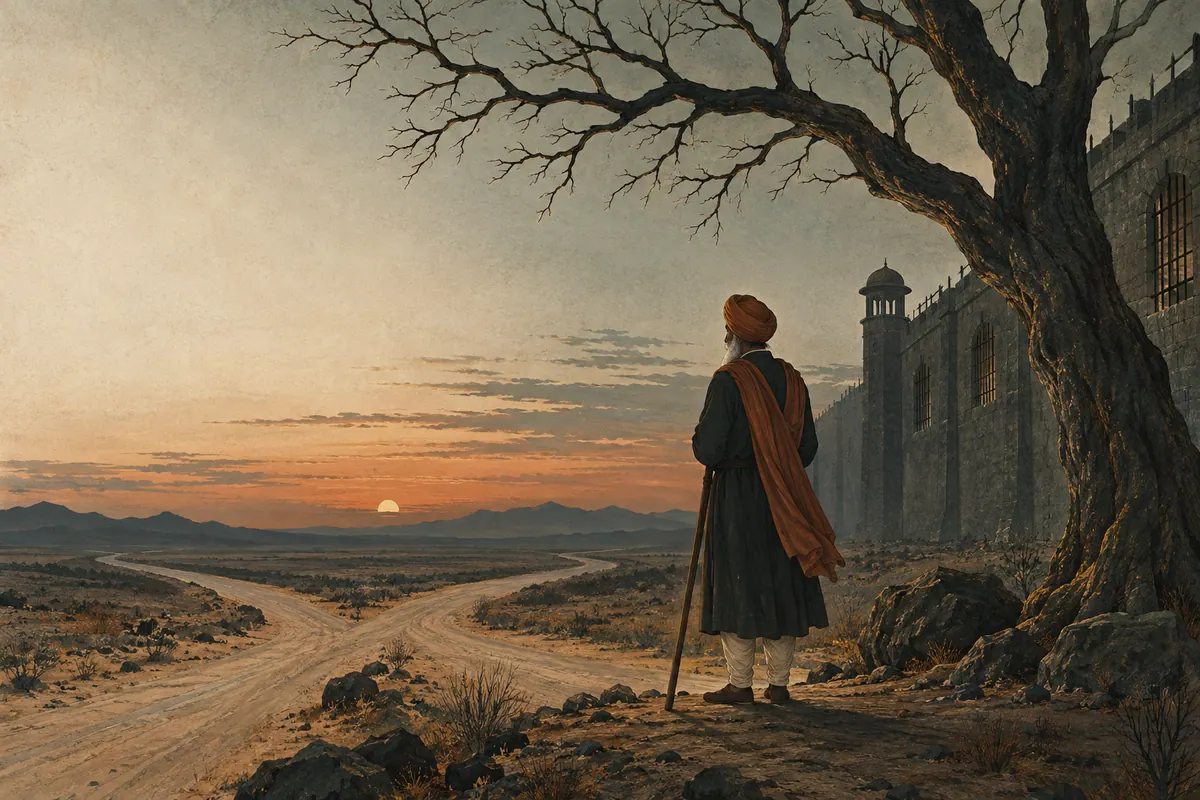
Hello friends, I’m your friend Roshni. When borders are drawn overnight, they do not merely divide land — they fracture people’s identities and entire worlds. Today we step into a story that leaves us asking who was truly mad: the inmates locked inside an asylum, or the supposedly sane leaders outside?
Partition divided a country, yet what became of the man whose village seemed to vanish off the map? Saadat Hasan Manto’s celebrated story Toba Tek Singh captures the confusion, helplessness, and quiet anguish of 1947 with unmatched sharpness.
When the governments of India and Pakistan decide to exchange not just prisoners but asylum inmates as well, a strange uproar erupts inside a Lahore mental asylum. Join me as we walk through Manto’s stark, unforgettable satire — narrated in Hindi on Baatcheet.
Listen in Roshni’s voice (Hindi audio)

Narrated complete in Hindi as a single episode by Roshni on YouTube and Spotify, with a 40-second preview short.
Toba Tek Singh — Spoiler-free summary
Set a few years after the 1947 Partition of India and Pakistan, Toba Tek Singh opens inside a Lahore mental asylum with an extraordinary official decree: the two governments have agreed to exchange asylum inmates across the border. Muslim inmates in India will be sent to Pakistan, and Hindu and Sikh inmates in Pakistan will be transferred to India.
As the news spreads inside the asylum, bewilderment takes over. No one can quite grasp what Pakistan is or where it sits on the map. Some try to make sense of India and Pakistan; others reject the division outright. Listening to their puzzled exchanges, the reader begins to feel that the asylum inmates are far more lucid than the politicians outside.
Among them is Bishan Singh, affectionately known to everyone as “Toba Tek Singh” after his ancestral village, where he once owned land. Locked in the asylum for fifteen years, he has neither lain down nor slept; his legs have swollen from standing day and night. Only one urgent question occupies his mind: where is his village, Toba Tek Singh — in India or in Pakistan?
Gentle and harmless, Bishan Singh mutters a cryptic refrain and asks everyone he meets about his village’s fate, yet no one has an answer — neither the inmate who declares himself God nor the one who climbs a tree in protest. Their confusion mirrors the disbelief of millions whose homes suddenly fell on the wrong side of an arbitrary line.
When the transfer day arrives and the inmates are brought to the border, what becomes of Bishan Singh? Does he ever find his village? Manto’s satire balances dark humor and heartbreak so tightly that you scarcely know whether to laugh or weep.
Full plot summary and ending (spoilers)
If you are experiencing this story for the first time, listen to the Hindi audio on YouTube first — the ending lands best there. Then come back here.
Yes, show the full plot and ending
Set a few years after the 1947 Partition, Saadat Hasan Manto’s Toba Tek Singh follows the commotion inside a Lahore asylum after India and Pakistan order a mutual exchange of mental patients along religious lines. Inside the wards, the inmates struggle to understand how neighbors who lived together yesterday suddenly belong to separate nations. One climbs a tree and announces he wants neither India nor Pakistan, capturing the absurdity of political borders.
At the center of the story stands Bishan Singh, a Sikh landowner from the village of Toba Tek Singh who has spent fifteen years in the asylum. Everyone calls him Toba Tek Singh. For fifteen years he has stayed upright without sitting or sleeping, his feet swollen, obsessed with a single question: is his village now in India or Pakistan?
No one can give him a straight answer — not even the inmate who calls himself God, who claims he has not yet issued an order on the matter. Bishan Singh’s old friend and neighbor Fazal Din visits the asylum and gently informs him that his family has safely moved to India, yet Bishan Singh’s heart remains anchored to his native soil.
The climax arrives on a freezing night at the Wagah border, where officials from both countries process the transfer as routine paperwork. When Bishan Singh’s turn comes, he pauses to ask a border officer where Toba Tek Singh is. Told that it lies in Pakistan, he refuses to cross into India and instead runs into the narrow strip of no man’s land between the two barbed-wire fences.
Despite every effort, no one can persuade him to move. Just before dawn, the man who stood upright for fifteen years collapses face down and dies. Behind one fence lies India; behind the other, Pakistan. On that unnamed patch of earth in between lies Toba Tek Singh — a devastating indictment of Partition’s madness.
Key characters
- Bishan Singh (Toba Tek Singh)
- A Sikh landowner held in the Lahore asylum for fifteen years. Consumed by confusion over where his village now belongs after Partition, he stands continuously day and night.
- Fazal Din
- Bishan Singh’s old friend and neighbor who visits him at the asylum to tell him his family has safely relocated to India.
- The Asylum Inmates
- Fellow patients cut off from outside politics — including one who claims to be God and another who climbs a tree — whose remarks expose the absurdity of Partition.
- The Border Officials
- Police and government officers from both countries at the Wagah border who treat the transfer of human lives as mere administrative paperwork.
Themes
The absurdity of Partition
Saadat Hasan Manto’s Toba Tek Singh steps away from conventional Partition accounts to satirize the sheer absurdity of political division. A sudden border turns lifelong neighbors into strangers, leaving even asylum inmates bewildered over where home went — their confusion feeling far more rational than the politics outside.
Home and the search for belonging
In Toba Tek Singh, Manto shows how a person’s village is not merely a dot on a map, but an entire identity. For Bishan Singh, his soil matters more than religion or nationhood; asked whether he will go to India or Pakistan, he wants only the home he loves.
Who is truly mad — those inside or outside?
Manto’s Toba Tek Singh strips away society’s pretense of sanity. Through stark irony, he suggests that the supposedly rational leaders who carved millions of lives along arbitrary borders displayed a far crueler madness than the inmates locked behind asylum walls.
Helplessness and silent protest
Listening to Manto’s story highlights the quiet powerlessness of ordinary people swept up by Partition. Bishan Singh’s fifteen years on his feet — and his final stand in no man’s land — become a silent protest against a system that took everything from him without offering an answer.
Saadat Hasan Manto
Saadat Hasan Manto (1912–1955) stands among the most fearless and unsparing writers in Urdu literature. He wrote honestly about subjects society preferred to ignore, and lived through the trauma of Partition himself when he had to leave Bombay for Lahore, a city where he never fully felt settled. Toba Tek Singh was among the final stories he wrote near the end of his life. His direct, unadorned prose keeps his work powerfully alive decades later.
Why listen to this Hindi audiobook?
In Roshni’s unhurried Hindi narration, Toba Tek Singh is not just heard — it is felt. Her calm pacing brings Bishan Singh’s quiet desperation straight to the heart, carrying you back to the stark human reality of 1947 in a single complete episode. Put on headphones in a quiet moment to absorb Manto’s satire and the lasting ache of Partition.
Frequently asked questions
Who wrote Toba Tek Singh?
Toba Tek Singh was written by acclaimed Urdu author Saadat Hasan Manto near the end of his life and published in 1955. It is widely considered one of the defining short stories of the 1947 Partition.
Where is Toba Tek Singh set?
Saadat Hasan Manto’s story is set a few years after the 1947 Partition, inside a mental asylum in Lahore and finally at the Wagah border, where both governments conduct an exchange of asylum inmates.
How does Toba Tek Singh end?
At the end of the story, Bishan Singh (Toba Tek Singh) refuses to cross into India after learning his village lies in Pakistan. He stands in the no man’s land between the two borders and collapses dead there — on land belonging to neither country.
Where can I listen to Toba Tek Singh in Hindi audio?
You can listen to Roshni’s complete Hindi narration of Saadat Hasan Manto’s Toba Tek Singh for free on Baatcheet’s YouTube channel and Spotify podcast.
What is the central message of Manto’s Toba Tek Singh?
Through Toba Tek Singh, Manto exposes the absurdity of Partition and the defeat of basic humanity beneath political lines, showing how arbitrary borders shattered millions of ordinary lives and homes.
Where can Global Indians listen to Hindi audiobooks like Toba Tek Singh?
Global Indians living abroad can listen to Toba Tek Singh and other classic works narrated in Hindi on Baatcheet’s YouTube channel and Spotify — a meaningful way to stay connected to Partition history, literature, and language.
Listen next
The Postmaster
Rabindranath Tagore
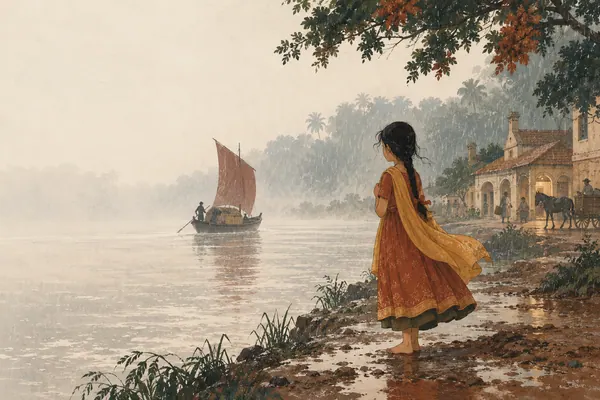
Rabindranath Tagore’s The Postmaster (1891) tells the tender story of a lonely Calcutta clerk posted to a remote Bengal village and Ratan, the orphaned girl who cares for him. Listen to the complete Hindi audio narration by Roshni on YouTube and Spotify.